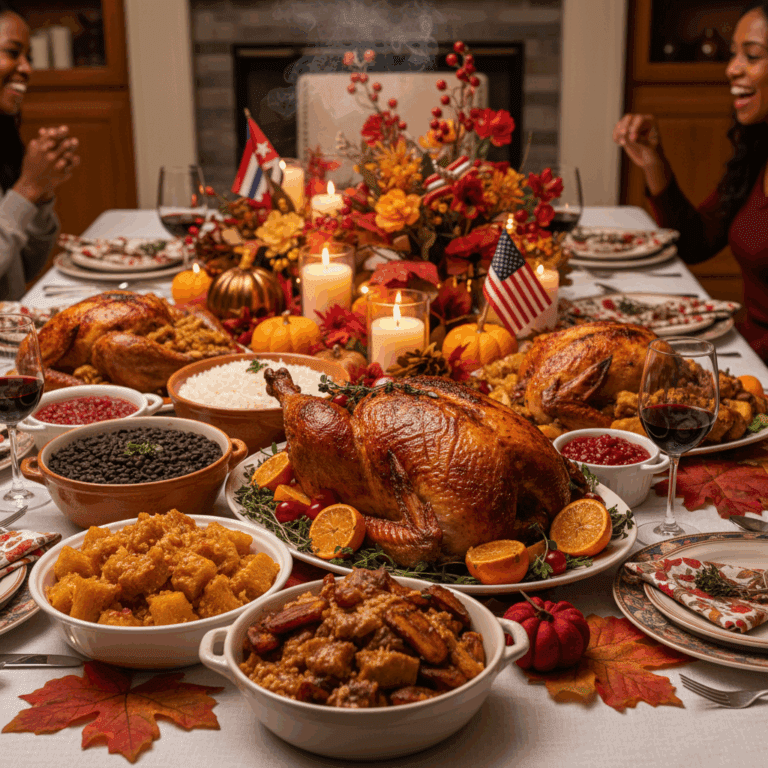
I still remember the first time a relative smuggled a little jar of bright-green mojo across islands and airports — the sharp bite of garlic, the odd bitterness of sour orange, and a warmth that felt like home. That jar made me curious: where did this ‘mojo’ actually come from? Spoiler: it’s not strictly Cuban. In this small, slightly messy outline I’ll walk you through the sauce’s tangled origins, its staple ingredients, why Cuban families worship it at roast-pork feasts, and how it quietly traveled the Atlantic.
Where Mojo Came: Canary Islands as a cultural crossroads
Canary Islands origin: Where mojo came before Cuba
When I started digging into mojo sauce origins, one detail kept showing up in the sources: the Canary Islands origin comes first. Mojo wasn’t invented in Cuba out of nowhere. It was already part of island life—made in home kitchens, passed down by families, and shaped long before Canarian migrants carried it across the Atlantic in the 1800s (19th century).
That matters because it changes the story. Cuban tables made mojo famous in their own way, but the roots point back to the Canaries, where food had centuries to blend and settle into something recognizable.
Portuguese word molho: a clue in the name
The name itself hints at travel. Many writers connect “mojo” to the Portuguese word molho, meaning “sauce.” With Portuguese influence moving through Madeira and nearby Atlantic routes, it’s easy to see how a simple kitchen word could shift in sound and spelling as it crossed islands and languages.
So even before we talk ingredients, the vocabulary tells me this sauce belongs to a wider Atlantic world—not one single country.
A true crossroads: Europe, Africa, and the Americas in one bowl
The Canary Islands sat on busy sea lanes linking Europe, Africa, and the Americas. That made them a culinary bridge, and mojo grew right in the middle of that traffic.
-
Chili peppers arrived from the Americas and gave mojo its heat.
-
Pimentón (paprika) and olive oil reflect strong Spanish influence.
-
Cumin carries the scent of North Africa and Moorish links (after roughly 800 years of influence in parts of Spain).
And even earlier, the Guanche people shaped local tastes over about 1,500 years before Spanish arrival—another layer in the background of what became “traditional.”
A small scene I can’t shake
I picture an afternoon picnic on Gran Canaria: a shepherd breaks open a sack of papas arrugadas, still warm and wrinkled with salt, and offers me a spoonful of red mojo. It’s sharp with garlic, earthy with cumin, and bright with pepper—simple, but unforgettable.
“Mojo is a living memory of island kitchens, where every family has its own twist.” — Lyana Blount
Sauce Anatomy: Core ingredients and the green vs. red split
Mojo sauce ingredients: the backbone I always start with
When I trace mojo from the Canary Islands to Cuban tables, I keep coming back to the same simple base. No matter the style, most Mojo sauce ingredients begin with a core trio: garlic, olive oil, and citrus—traditionally sour orange juice (naranja agria). I mash garlic first, then loosen it with Garlic olive oil, and only then add the citrus so it bites and blooms.
“Authentic mojo leans on naranja agria — the bitterness is part of its identity.” — Lyana Blount
That bitterness matters. In many modern kitchens, lime or lemon steps in, but the traditional base is sour orange, not lime. I once argued with a cousin over whether lime was “good enough” as a substitute for naranja agria—spoiler: it’s common, but traditional purists frown.
Mojo criollo traditional: the “everyday” classic
Mojo criollo traditional is the version I grew up seeing most: garlic, olive oil, sour orange juice, plus cumin and a warm dusting of paprika. It’s not fancy, but it’s steady—built to soak into pork, yuca, or chicken.
Green mojo verde: herbs change everything
Green mojo verde takes that same base and turns it bright. I add cilantro or parsley (sometimes both), and suddenly it feels like a cousin of salsa verde. The garlic stays bold, the olive oil keeps it silky, and the herbs do the talking.
Red mojo rojo and mojo picón spicy: smoke and heat
Red mojo rojo leans on smoked pimentón paprika cumin notes, often with chili flakes for heat. This overlaps with Mojo picón spicy, a Canary Islands staple that brings more fire. The ingredient roots tell the story: pimentón from Spain, cumin with North African ties, and chili peppers from South America.
-
Always: garlic, olive oil, paprika
-
Green: cilantro/parsley
-
Red: smoked pimentón, chili, sometimes cumin
Why Cuban Families Keep Mojo: Rituals, roast pork, and everyday use
I grew up thinking mojo was just “what we do” before a big meal. Later I learned the story: Spanish migration to Cuba in the 1800s—especially Canarian families—brought this garlic-and-citrus tradition and tied it to our biggest rituals. That’s why it stuck. It wasn’t only a flavor; it became a habit.
Lechón asado traditional: the Cuban roast pork moment
If you ask me where Mojo marinade sauce truly shines, I’ll point to Lechón asado traditional. This is the canonical mojo moment: it’s both the marinade and the finishing sauce. We rub it into the meat, let it sink in, and then spoon more over the pork when it’s done—so the outside stays bold and the inside stays juicy. That’s why Cuban roast pork and mojo feel inseparable at holidays, birthdays, and any Sunday that turns into a party.
“In Cuban homes, mojo is nearly a family member — it arrives at celebrations and disappears fast.” — Lyana Blount
My grandmother’s Sunday ritual (two pitchers and a mortar)
In my mind, my grandmother’s kitchen always starts the same way: two pitchers of sour orange on the counter, a heavy mortar packed with garlic, and a long afternoon ahead. The pig would be smoking outside, and she’d keep one bowl of mojo “for the meat” and another “for the table.” Nobody touched the second bowl until the first slices of pork hit the platter.
Mojo dip plantain, papas arrugadas potatoes, and everyday use
Mojo lasts because it works everywhere. On regular nights, it becomes a Mojo dip plantain—a quick dunk for tostones or maduros. And when I want to nod to the Canarian side of the story, I serve Papas arrugadas potatoes with mojo on the side, the way island families have done for generations.
-
Marinade: for pork, chicken, or fish
-
Finishing sauce: spooned over hot meat right before serving
-
Dip: for plantains, bread, and potatoes
That versatility also explains how Canarian emigration helped spread mojo across the Caribbean, into Mexico, and up to Florida and Louisiana—where it’s often remade as bottled sauce or even mojo seasoning modern in spice form.
Global Remix: Variations, modern twists, and where mojo shows up today
From Canary Islands mojo to the Caribbean and the American South
When I trace mojo’s path, I keep coming back to movement—especially heavy Canarian emigration that carried familiar sauces across the Americas. That’s how a homey island condiment became a Caribbean staple and then kept traveling, showing up from Florida to Louisiana. In places like Miami and New Orleans, mojo feels right at home because it works as a marinade, a table sauce, and a quick flavor fix.
“Mojo’s adaptability is its genius — it absorbs local flavors and feels native everywhere it lands.” — Lyana Blount
Caribbean mojo variations I see again and again
The fun part is how quickly mojo changes based on what grows nearby and what people crave. These Caribbean mojo variations often share garlic and acid, but the details shift:
-
Puerto Rico mojo verde: green, herb-forward, often with cilantro (or parsley) and lots of brightness.
-
Mojo picón spicy: a red, chile-driven style that nods to Canarian roots but leans into New World heat.
-
Citrus-forward marinades: orange and lime blends used on pork, chicken, and seafood across islands.
-
Smoky red versions: built with pimentón for depth and that “grilled” feeling even before cooking.
International mojo variations and an ingredient “origin map”
To me, International mojo variations are proof that mojo is a culinary bridge—Mediterranean and North African ideas reworked with American ingredients.
|
Ingredient |
Common origin |
What it adds |
|---|---|---|
|
Chili peppers |
Americas |
Heat, fruitiness |
|
Pimentón |
Spain |
Smoke, color |
|
Cumin |
North Africa |
Warm, earthy base |
Mojo seasoning modern: swaps, bottles, and blends
In my kitchen, “modern” mojo often means simple experiments: swapping sour orange for lime, or cilantro for parsley when that’s what I have. Outside the home, Mojo seasoning modern shows up as bottled sauces and dry spice blends labeled “mojo,” especially in specialty stores—fast, convenient, and built for weeknight cooking.
A “mojo passport” tasting (and why the word travels)
I like imagining a mojo passport night: you queue dishes by island, and each version gets a stamp for its signature ingredient. And honestly, the word mojo helps it spread—short, easy to say, and easy to remember across cultures.
Wild Cards: Quotes, analogies, and a hypothetical flavor map
Mojo sauce history, in voices I trust
When I trace Mojo sauce history, I don’t just follow dates—I follow people. One line keeps echoing in my head, because it says what I’ve been trying to taste on the page:
“Mojo connects islands and people; taste it and you can map a migration story.” — Lyana Blount
That’s the heart of the Mojo cultural crossroads: a sauce that carries travel inside it. And from the Canary Islands mojo side of the story, I love the small lore—grandmothers crushing garlic with salt, the mortar warm from work, the kitchen smelling like vinegar and pepper. No fancy tools, just rhythm and memory.
My favorite analogy: mojo as a passport stamp
I think of mojo like a passport. Every ingredient is a stamp, proof that someone arrived, stayed, and cooked. Garlic feels like the bold entry mark. Sour citrus or vinegar is the ocean crossing—sharp, bright, impossible to ignore. Oil is the “settled here” part, smoothing everything into one language. Even when families change the ratios, the message stays the same: we’ve been many places, and we’re still together at the table.
A hypothetical flavor map (what if it never crossed?)
Sometimes I play a “what-if” game: what if mojo never crossed the Atlantic? What if the Canary Islands version stayed put, and Cuba never adopted it, adapted it, made it a staple?
|
Place |
Signature pull |
What the table might miss without mojo |
|---|---|---|
|
Canary Islands |
Garlic + vinegar + pepper |
A shared island shorthand for “come eat” |
|
Atlantic crossing |
Trade routes + family movement |
The bridge that turns sauce into story |
|
Cuba |
Citrus + garlic + oil |
The bright “wake-up” note on pork, yuca, and rice |
“A spoon of mojo is a shortcut to belonging.”
“If the sauce disappears, the meal still feeds you—but it won’t greet you the same way.”
That’s my closing thought: mojo isn’t just flavor. It’s a map you can eat.
TL;DR: Mojo began in the Canary Islands as a cross-cultural sauce (molho), morphed via Spanish and Canarian migration into Cuban tables as a roast-pork staple, and today appears in many Caribbean and US variations—core: garlic, olive oil, citrus, paprika.